

n8n SSO: Do You Need It, or Are Shared Logins Fine?
A practical guide to n8n SSO: what it adds beyond shared logins, how it differs from SAML, and which n8n plan unlocks it for a growing team.

Checked against the cited sources on .
The Real Question: Identity Risk vs. Licensing Cost
If your n8n team currently shares one admin login, or a few people log in with the same credentials, you already know the arrangement is not ideal. But the real decision behind n8n SSO isn't a feature checkbox to tick off — it's a tradeoff between identity risk and licensing cost. Shared logins are cheap and simple until someone leaves the company, a credential leaks, or someone asks who actually touched a production workflow.
n8n's own documentation frames this explicitly: it advises moving to a paid Business or Enterprise plan specifically when you need SSO, environments, projects, or external secrets, rather than simply because a team has grown. That framing separates two different needs: safer sharing of workflows and credentials among people who already trust each other, and centralized identity that controls who can log in at all.
Community edition, n8n's free self-hosted tier, explicitly excludes SSO along with SAML and LDAP support. So if you're running Community today, single sign-on isn't something you're missing through misconfiguration — it simply isn't offered at that tier.
Sources: Configure SSO | Deploy | n8n Docs, Compare editions | Deploy | n8n Docs
What You Get Before Paying for n8n SSO
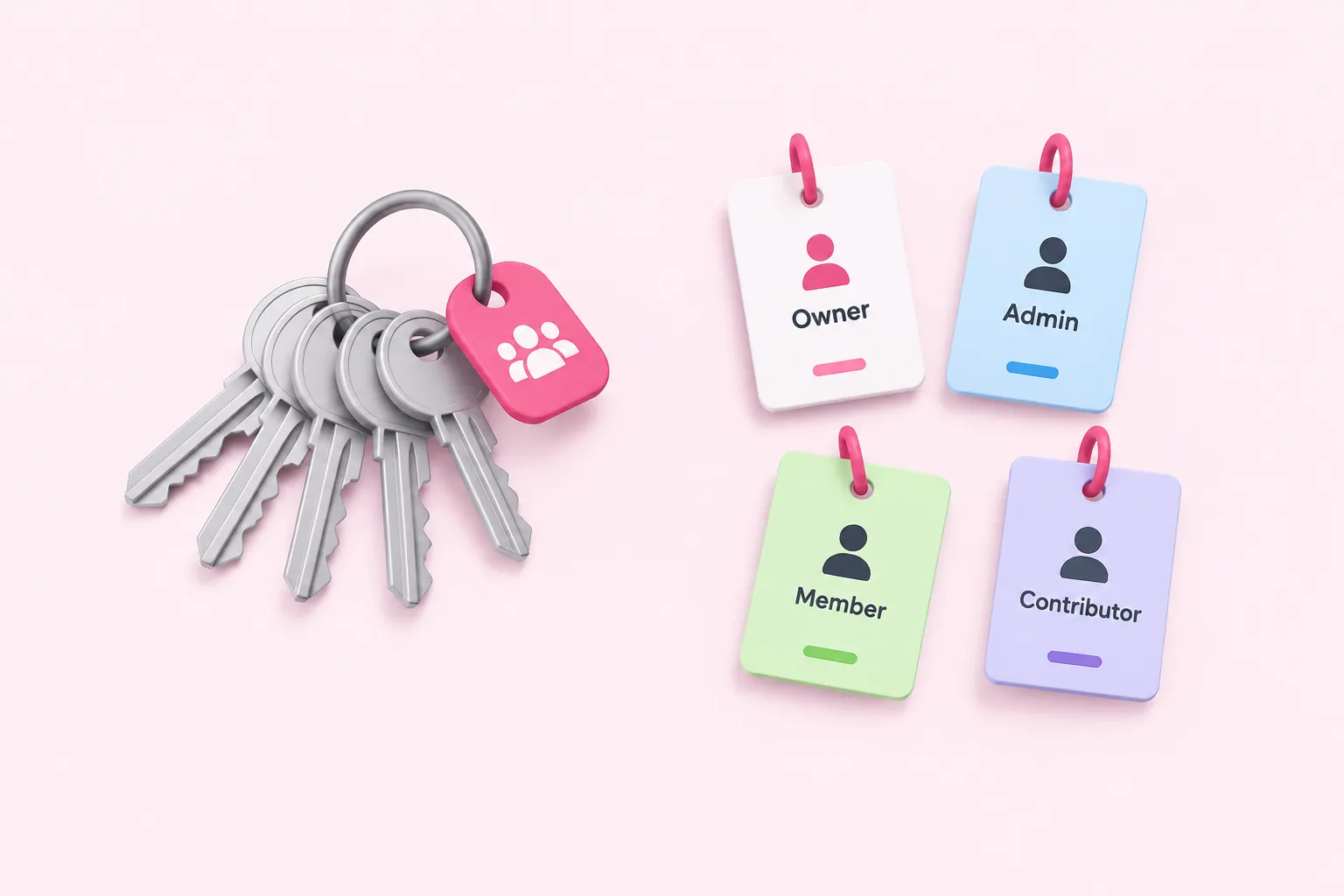
Before spending on SSO, check whether project-based role-based access control already solves your problem. n8n organizes workflows and credentials into projects with roles, and this capability is available far more broadly than SSO: on every n8n Cloud plan, and on self-hosted Registered Community, Business and Enterprise editions.
That means a team on n8n Cloud's entry plan, or on the free self-hosted Registered Community edition, can already separate who owns which workflows and credentials without paying for single sign-on. What you don't get at those tiers is custom, finer-grained roles beyond the built-in Owner, Admin and Member roles — those custom instance and project roles are restricted to Enterprise only, on both Cloud and self-hosted.
For many small, trusted teams, that combination — shared credentials plus project roles — is genuinely enough for now. The table below lays out where each capability sits.
| Edition / plan | Project roles (RBAC) | Custom roles | SSO (SAML/OIDC) |
|---|---|---|---|
| Community (self-hosted) | Not available | Not available | Not available |
| Registered Community (self-hosted) | Available | Not available | Not available |
| n8n Cloud, lower tiers | Available | Not available | Not available |
| Business (self-hosted only) | Available | Not available | Available |
| Enterprise (Cloud or self-hosted) | Available | Available | Available |
Sources: Configure SSO | Deploy | n8n Docs, Use SAML | Administer | n8n Docs, Set permissions and roles (RBAC) | Administer | n8n Docs, Compare editions | Deploy | n8n Docs
What Does n8n SSO Actually Add, and How Does It Differ from SAML?
So what is the difference between SSO and SAML? Single sign-on is the general capability of logging into n8n using an identity provider your organization already manages, instead of a separate n8n password. n8n's documentation lists SAML and OIDC as the two supported protocols for implementing n8n SSO, though n8n's documentation doesn't itself spell out the technical differences between the two standards.
Turning it on isn't self-service for end users: n8n's documentation states that only an instance owner or admin can enable and configure SAML or OIDC, so setting up SSO is an administrative decision your ops or IT lead makes once, not something individual team members configure themselves.
n8n's dedicated SAML documentation confirms the same gate found elsewhere: SAML is available on Business and Enterprise plans, matching the general SSO availability rule described above.
Sources: Configure SSO | Deploy | n8n Docs, Use SAML | Administer | n8n Docs
Which n8n Plan or Edition Unlocks SSO
Putting it plainly: n8n SSO is available on n8n Cloud's Enterprise plan, and on self-hosted Business or Enterprise plans. It is not available on Community, Registered Community, or n8n Cloud's lower-tier plans.
The self-hosted Business plan is self-hosted only — it isn't currently offered as an n8n Cloud tier — and it bundles SSO, SAML and LDAP together with n8n's other collaboration features on top of everything included in Pro. n8n's pricing page lists Business at 667€ per month when billed annually, which gives a cost anchor for the tier that unlocks SSO on self-hosted n8n. Treat that figure as current only as of n8n's pricing page, and confirm it before budgeting, since n8n itself states that plan pricing and included features can change.
If you need SSO on n8n Cloud itself, or you need the custom instance and project roles mentioned earlier, you're looking at Enterprise, which n8n offers both hosted and self-hosted. Enterprise has no published price — it's quote-based through n8n's sales process, so the cost gap between Business and Enterprise can't be quantified from n8n's public pages.
Sources: Configure SSO | Deploy | n8n Docs, Use SAML | Administer | n8n Docs, Set permissions and roles (RBAC) | Administer | n8n Docs, n8n Plans and Pricing - n8n.io
A Community Workaround Exists — and Its Tradeoffs

If Business-tier pricing is the blocker and you're strictly self-hosting, be aware that community developers have built unofficial alternatives. One community-tier project, n8n-oidc, adds OpenID Connect login to self-hosted n8n through external hooks, and its author describes it as working without an enterprise license, according to the project's own announcement.
The same announcement claims official self-hosted SSO requires a 'Startup license' starting at $400 per month billed annually — a figure that doesn't match n8n's current official pricing page, which lists the self-hosted Business plan at 667€ per month with no separate Startup tier for SSO. Treat that pricing claim as outdated or unverified rather than current.
This kind of workaround trades a license fee for self-managed risk: it isn't affiliated with, reviewed, or endorsed by n8n, and its security and support implications aren't evaluated here. For a team handling real production credentials, that's a real cost even if no invoice arrives.
Sources: n8n Plans and Pricing - n8n.io, Announcing n8n-oidc • Cameron Eagans
Decision Checklist: Signals It's Time to Pay for n8n SSO
Use these signals, drawn from n8n's own plan guidance, to decide when the upgrade is worth it rather than guessing.
Sources: Configure SSO | Deploy | n8n Docs, Set permissions and roles (RBAC) | Administer | n8n Docs, Compare editions | Deploy | n8n Docs