

n8n HIPAA Compliance: What a Self-Hosted Setup Actually Requires
What n8n HIPAA compliance requires: what to check before trusting any hosting option with PHI, and what self-hosting n8n still needs to add.

Checked against the cited sources on .
Is n8n HIPAA Compliant Out of the Box?
If protected health information might pass through an automated workflow, the n8n HIPAA question is not abstract — it decides which hosting option, which nodes and which contracts a team can use at all. The short answer: neither n8n Cloud nor a self-hosted instance is automatically compliant on its own. The obligation sits with the organization running the workflow, not with the software itself. The sections below work through what HIPAA's Security Rule actually requires, where each hosting option stands, and what a self-hosted deployment still has to add before PHI should touch it.
This is general educational information about a regulatory framework, not legal advice; organizations should confirm their own obligations with qualified counsel before routing patient data through any workflow tool.
What HIPAA's Security Rule Actually Requires
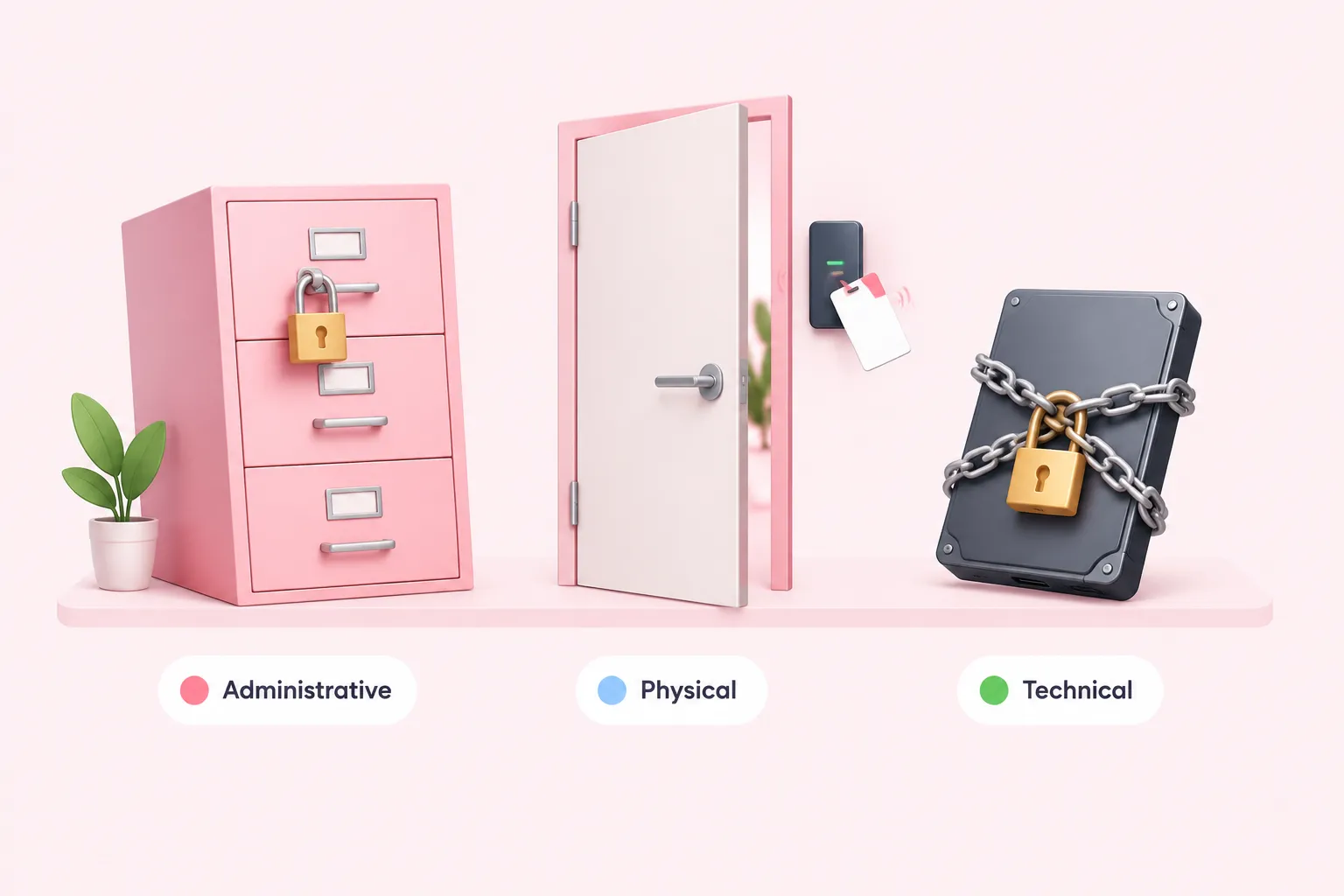
HIPAA's Security Rule is a federal regulation, not an n8n-specific standard. It sets a baseline of administrative, physical and technical safeguards that any system touching electronic PHI must meet, regardless of which software or vendor is involved, according to HHS's 2026 regulatory overview of the rule (F1). HHS's own 2026 summary confirms this applies to every regulated entity equally: each one must put in place reasonable and appropriate safeguards protecting ePHI, whatever tools it chooses to run (F2).
- Administrative safeguards: policies, workforce training and access management procedures
- Physical safeguards: facility access and device controls
- Technical safeguards: encryption, audit controls and access controls for electronic systems
None of that text mentions workflow automation or n8n specifically — the Security Rule describes required outcomes, not configuration steps, which is why asking whether n8n itself is HIPAA compliant is the wrong framing. The better question is whether a specific deployment, its contracts and the nodes inside it together satisfy those outcomes.
Sources: The Security Rule | HHS.gov, Summary of the HIPAA Security Rule | HHS.gov
n8n Cloud vs Self-Hosted n8n for PHI
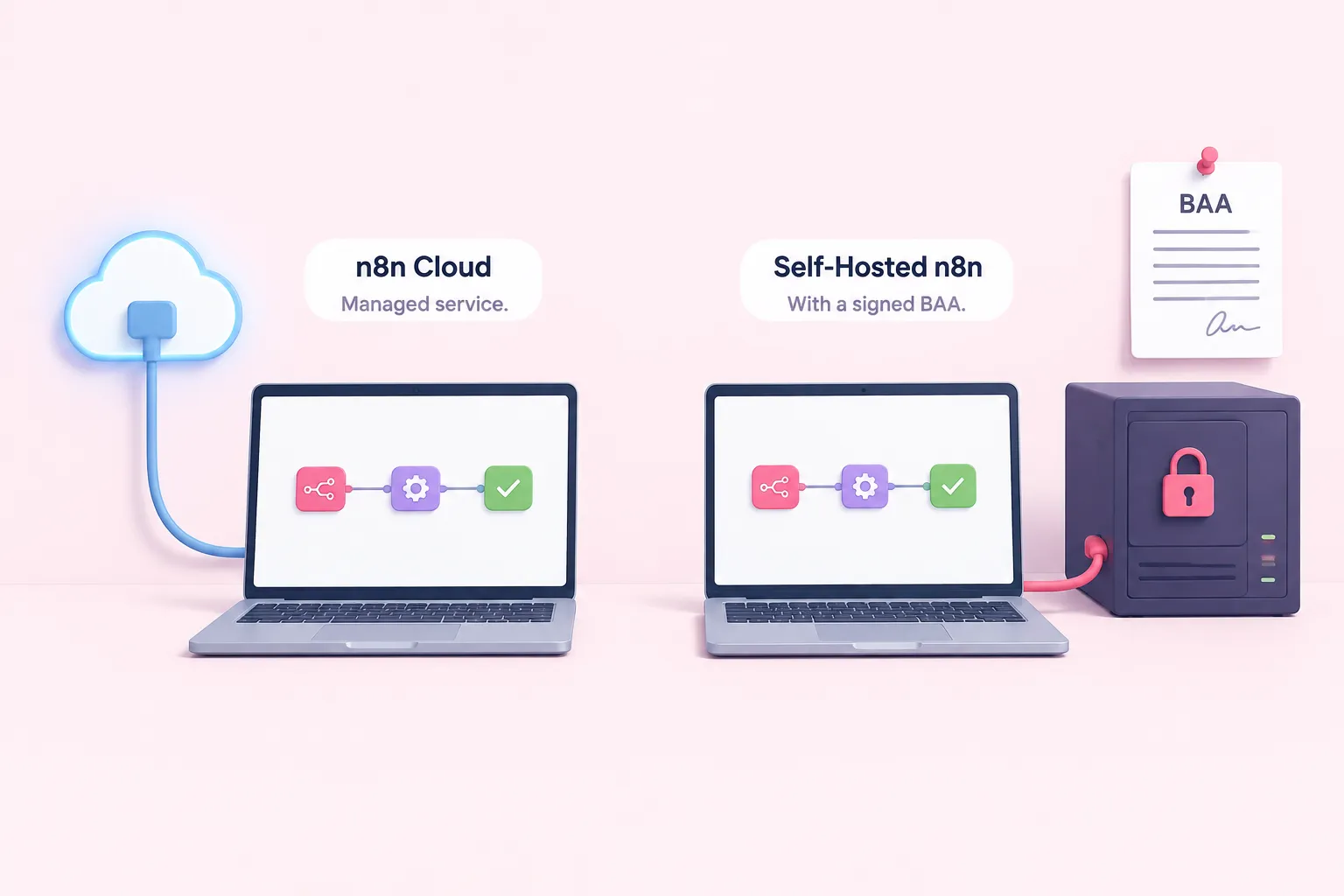
Two paths exist for running n8n at all: n8n Cloud, the managed service, or a self-hosted instance deployed by the organization itself. For PHI, they are not equally positioned. Nothing in the regulatory text reviewed here documents a business associate agreement covering a shared managed service by default, and HHS's 2026 summary is explicit that a written contract must be in place before any third party may create, receive, maintain or transmit ePHI on a covered entity's behalf (F3). Self-hosting removes that specific obstacle, but only partly.
| Option | PHI suitability | What's still needed |
|---|---|---|
| n8n Cloud | Unknown — no finding reviewed here documents n8n Cloud's business associate agreement status | Confirm directly with n8n whether a BAA is available before routing any PHI through it; if none is confirmed, use a self-hosted instance instead |
| Self-hosted n8n | A possible path, not automatic compliance on its own | A BAA with the hosting infrastructure, deliberate encryption, and a current downstream-node inventory |
Self-hosting only becomes part of a compliant architecture when the underlying infrastructure itself has a signed BAA with the organization — the hosting layer, not just the n8n application, has to be covered, as one HIPAA-focused hosting vendor frames it (F4). We'd treat self-hosting as a necessary first step rather than a finish line; a team that stops there is confusing control over the software with having met its legal obligations.
Sources: Summary of the HIPAA Security Rule | HHS.gov, Is n8n HIPAA Compliant? (2026 Guide)
Making Self-Hosted n8n PHI-Ready
A self-hosted n8n instance earns PHI-readiness through specific configuration choices, not through hosting location alone. At minimum that means encryption at rest on the database and file storage, and encryption in transit through a TLS-terminating reverse proxy in front of n8n, configured deliberately rather than assumed. Any SOC 2 alignment or SOC 3 report a hosting provider offers is evidence of general security maturity, not a substitute for the BAA itself — the two are different frameworks addressing different questions.
The chain of responsibility doesn't stop at the n8n instance itself. Every node that sends data onward — email, SMS, an EHR, a database, an AI model — becomes a destination that also needs its own BAA before PHI reaches it, under the same written-contract requirement HHS describes (F3). This matters especially where an AI node is selecting a tool on the workflow's behalf rather than a person choosing it deliberately. Josh Vidals, a cloud engineer at HIPAA Vault, made a related point about AI-assisted building in a live session on vibe coding and HIPAA:
In our view, the practical risk in n8n HIPAA setups usually isn't the core platform — it's the long tail of downstream nodes added over time without anyone re-checking whether the new destination has a BAA. We'd rather see a short, repeated inventory pass than a one-time sign-off.
Sources: Summary of the HIPAA Security Rule | HHS.gov, Is n8n HIPAA Compliant? (2026 Guide)
n8n HIPAA Readiness Checklist for Ops and IT Leads
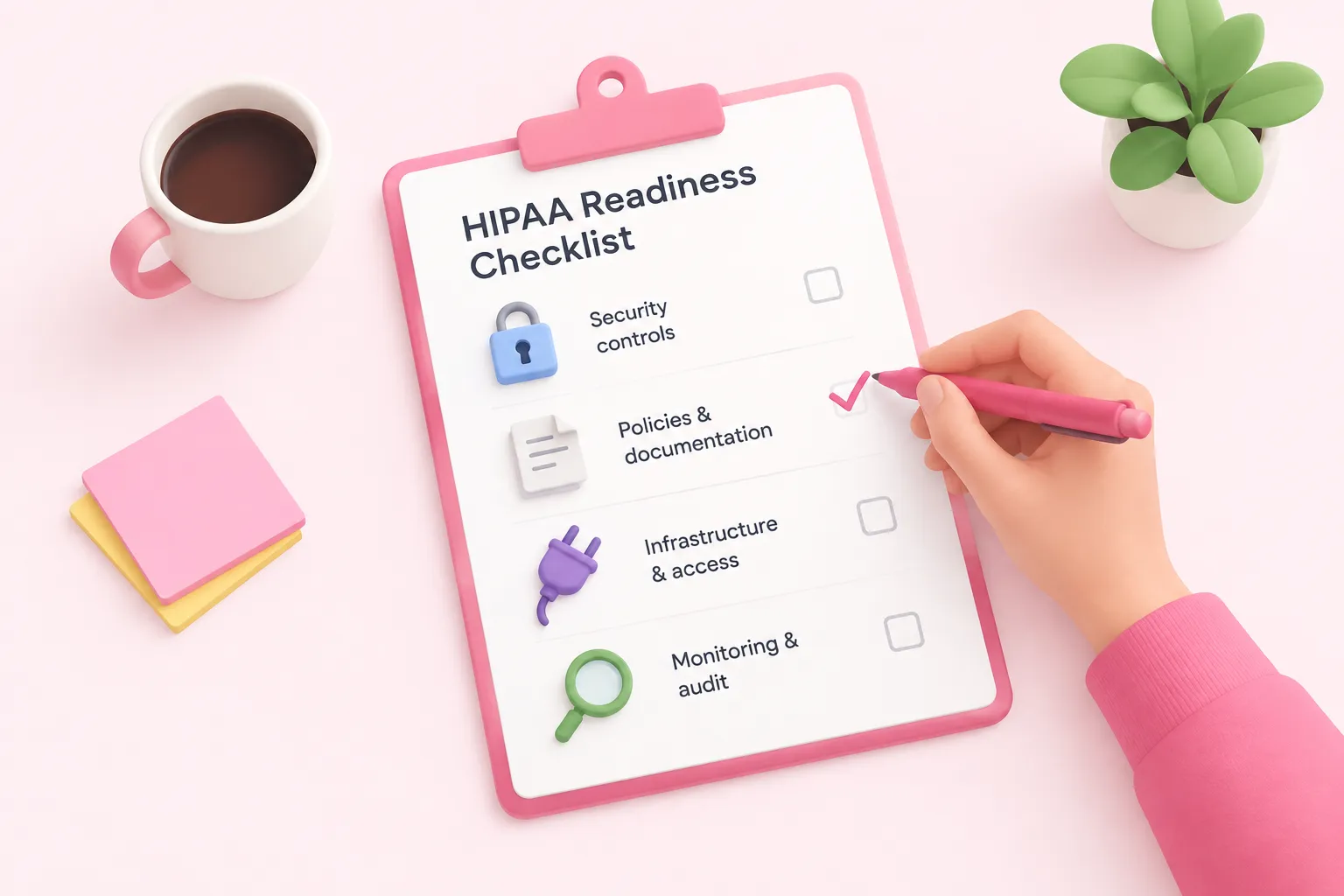
Put together, the requirements above translate into a short readiness pass before any PHI reaches a production workflow; this is editorial guidance drawn from the Security Rule's general requirements, not a certification checklist. We're strong believers in treating this as a recurring habit rather than a one-off gate, because new nodes get added to PHI workflows long after launch.
Sources: The Security Rule | HHS.gov, Summary of the HIPAA Security Rule | HHS.gov, Is n8n HIPAA Compliant? (2026 Guide)
Conclusion and Next Step
Self-hosting n8n is the only realistic starting point once PHI will touch a workflow, but it answers the hosting question, not the full n8n HIPAA compliance question. The BAA chain, deliberate encryption configuration and a current inventory of every downstream node still have to be built around it, and kept current as workflows change (F3, F4).
Sources: Summary of the HIPAA Security Rule | HHS.gov, Is n8n HIPAA Compliant? (2026 Guide)