

Is n8n a Process Orchestration Tool? What the Label Actually Requires
What does n8n process orchestration actually require, and where do n8n's sub-workflows and error workflows meet that bar, or fall short?

Checked against the cited sources on .
What Is Process Orchestration? The Distinction n8n Draws

The question of n8n process orchestration comes up often once a team has outgrown single workflows and starts asking whether n8n can coordinate dozens of automated tasks across systems, not just run one job end to end. To answer what is process orchestration in n8n's own terms, its blog, published in April 2026, defines orchestration as a central coordinating layer that manages multiple automated tasks across domains, distinct from task-level automation that simply executes a single job.
The stakes behind that distinction are real for teams managing AI alongside other systems. In Camunda's 2025 survey of 800 IT leaders, as reported secondhand in n8n's blog, 93% agreed that AI must be orchestrated like any other endpoint, which is one reason the orchestration label gets scrutinized rather than taken at face value.
A broader n8n blog post from September 2026 frames process orchestration more generally, describing it as an architectural control plane that coordinates the people, systems and tasks involved in a business process. That framing sets a high bar: coordinating people and cross-system state, not just chaining API calls together.
In our view, the label matters less than whether a team can point to exactly where state tracking and rollback live in its stack. Call it orchestration or not, that location is the real design decision a technical lead has to make.
Sources: Workflow vs. Orchestration: What Engineers Must Know – n8n Blog, Process Orchestration: Execution Models and Challenges – n8n Blog
The Six Capabilities a Process Orchestration Tool Needs
When teams search for n8n process orchestration capabilities, n8n's own comparison blog from June 2026 offers a checklist rather than a slogan: integration flexibility, coordination logic, visibility and monitoring, AI guardrails, security and auditability, and deployment flexibility. Treat it as the company's own editorial framing of what buyers should look for, not an independent certification standard. The table below sets out what each item means and what n8n's own sources actually address, leaving gaps marked rather than guessed.
| Capability | What it means | What n8n documents |
|---|---|---|
| Integration flexibility | Native connectors for top systems plus a catch-all connector | n8n's blog lists its generic HTTP/REST connector alongside native connectors as meeting this |
| Coordination logic | Sequencing, branching and conditional routing across tasks | Not documented in detail in the sources reviewed |
| Visibility and monitoring | Tracking execution state across a multi-step process | Partly addressed through execution recovery behavior, covered in the next section |
| AI guardrails | Controls on autonomous agent behavior inside a process | Not documented in detail in the sources reviewed |
| Security and auditability | Access control, audit trails and change tracking | SSO, RBAC, audit logs and Git-based version control, tied to Business and Enterprise plans |
| Deployment flexibility | Running the control layer in different environments | Not documented in detail in the sources reviewed |
Sources: Process Orchestration Tools: Features, Comparison, and Selection – n8n Blog, Workflow vs. Orchestration: What Engineers Must Know – n8n Blog
Where n8n's Own Features Map to the Checklist
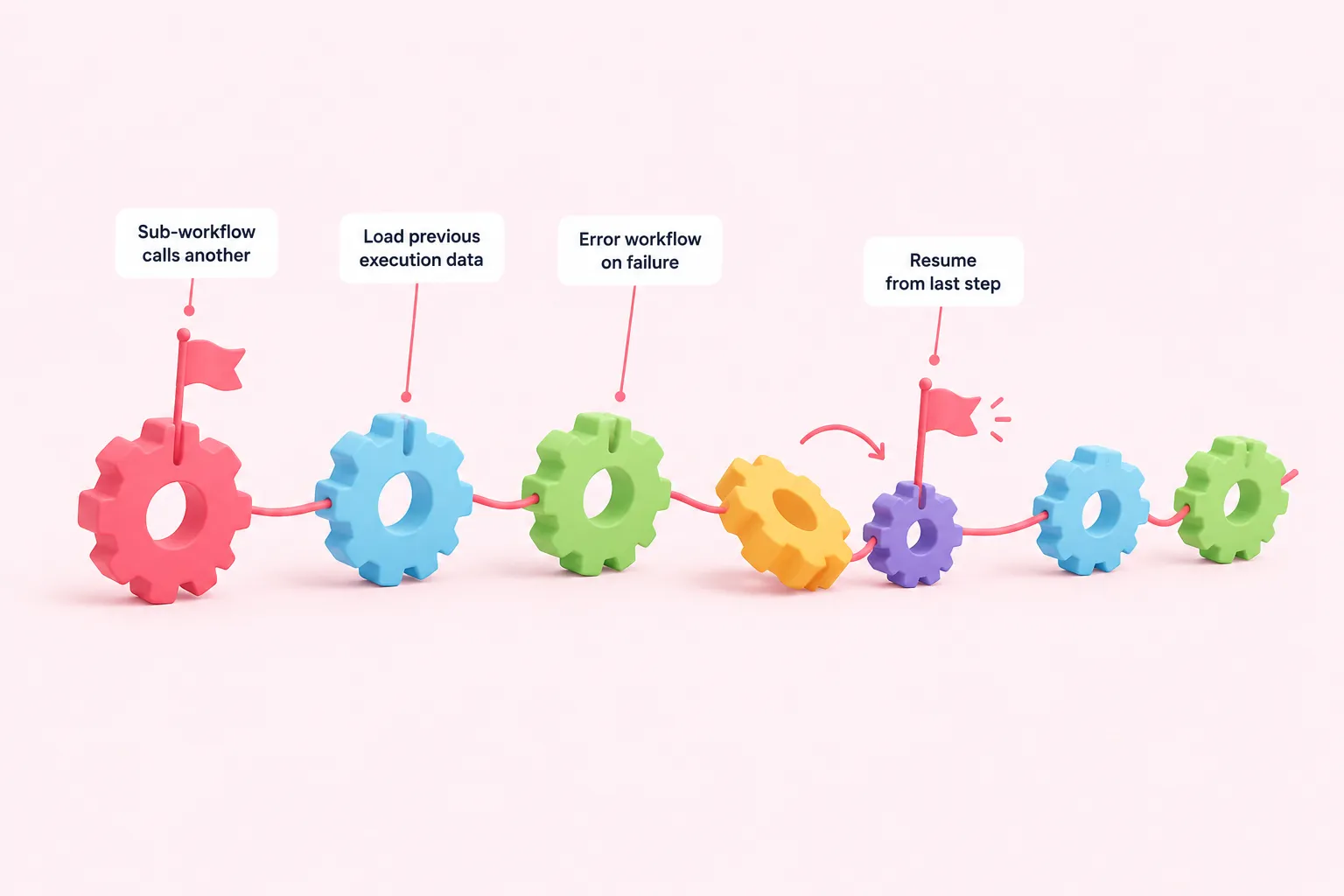
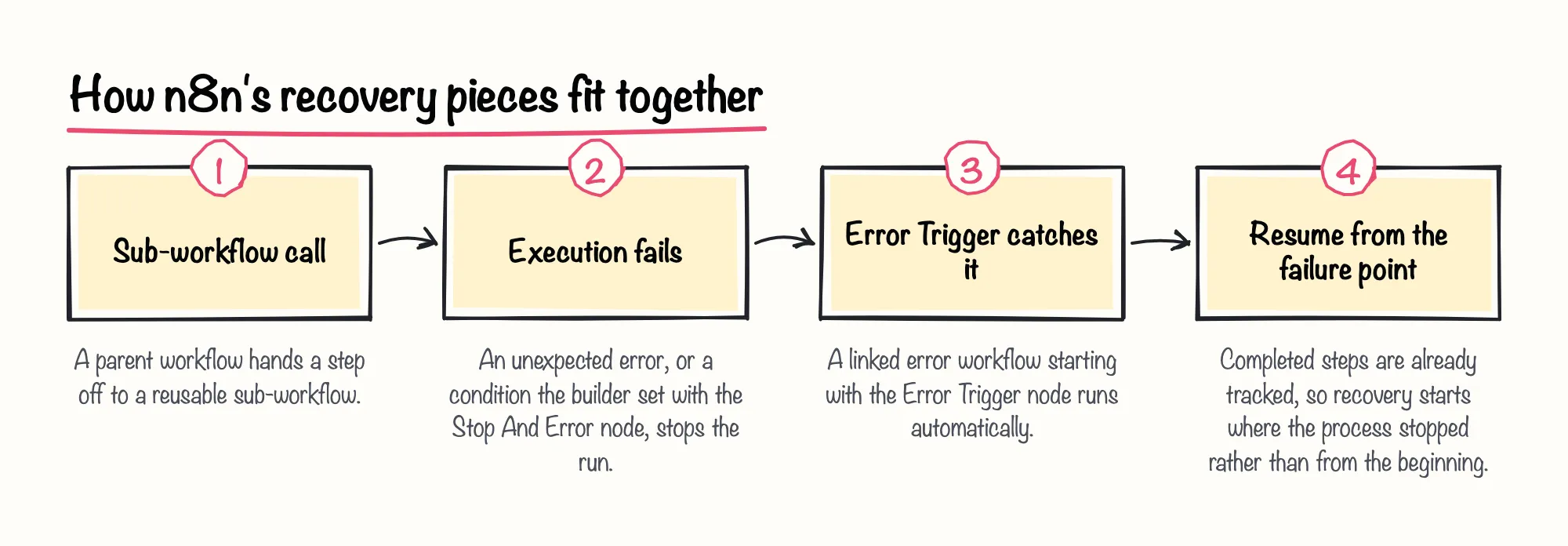
n8n's practical orchestration toolkit sits mostly in two features. Sub-workflows let one workflow call another, and n8n's documentation states that sub-workflow executions do not count toward a plan's monthly execution or active workflow limits, which supports building a process from smaller, reusable pieces. Loading data from a previous execution into a sub-workflow while building it is documented as available on n8n Cloud and on registered Community plans.
Failure handling is the second piece. An error workflow only runs automatically after a linked workflow fails if it starts with the Error Trigger node, per n8n's documentation. The Stop And Error node forces an execution to fail under conditions a builder chooses, which then triggers that configured error workflow. Together these implement what n8n's blog calls the double-execution problem: tracking which steps completed so a failure can resume from that point rather than restart from zero.
Sources: Break workflows into smaller parts | Build | n8n Docs, Handle errors gracefully | Build | n8n Docs, Workflow vs. Orchestration: What Engineers Must Know – n8n Blog
Where n8n's Comparison Stops Short
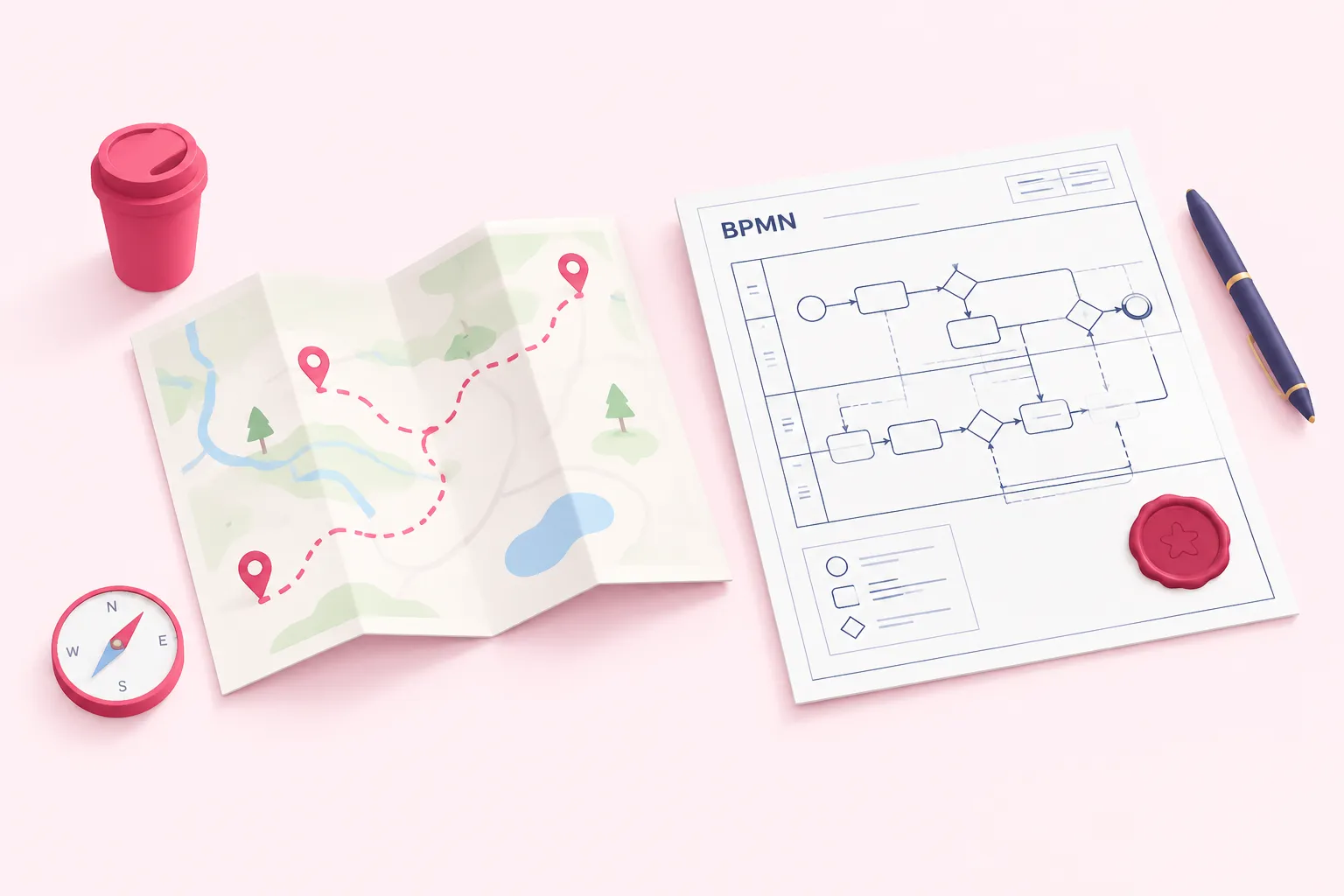
n8n's own comparison table is candid about its limits. It lists not supporting BPM-like workflows as n8n's main limitation against dedicated process-orchestration platforms. The same blog post notes that some orchestration environments use BPMN, Business Process Model and Notation, as a standardized way to model and execute business process logic, without claiming that n8n itself implements BPMN execution.
We'd be cautious about leaning on n8n for formal BPMN modeling or regulated case management; the company's own comparison table concedes that gap, and bending workflows to fake that support usually costs more than adopting a dedicated BPM suite for that one need. n8n's blog positions n8n's best fit among orchestration tools as technical teams who want low-code speed with full control, rather than regulated enterprises that need formal BPMN modeling.
So is n8n a process orchestration tool? By n8n's own best-fit framing, yes for technical teams that want low-code speed with full control over sub-workflows, error recovery and agentic steps across systems. By the same comparison table's own admission that n8n doesn't support BPM-like workflows, no for regulated enterprises that need formal BPMN modeling or compliance-grade case management; those teams are better served by a dedicated BPM suite.
Sources: Process Orchestration Tools: Features, Comparison, and Selection – n8n Blog, Process Orchestration: Execution Models and Challenges – n8n Blog
Execution Models: Deterministic, Dynamic and Agentic Orchestration
Orchestration tools generally sit somewhere between fully scripted and fully autonomous execution, though the exact dividing lines vary by vendor and aren't the focus of n8n's own documented capabilities here. n8n's September 2026 blog describes one category it does document, agentic orchestration, as a mix of deterministic logic and autonomous AI agents, and suggests implementing it in n8n by running AI Agent nodes inside an otherwise deterministic workflow.
We like this framing because it matches how most teams actually adopt AI inside a process: a deterministic backbone that calls an agent for the one step that genuinely needs judgment, rather than handing an entire process to an autonomous model with no guardrails.
Sources: Process Orchestration: Execution Models and Challenges – n8n Blog
Self-Reported Claims, a Practical Checklist, and Where to Get Help
Some of the loudest orchestration claims about n8n come from outside its own documentation. A Sequoia-produced newsletter summarizing an August 2025 interview with n8n's CEO describes the company's strategic shift as moving from workflow automation to becoming an orchestration layer for AI applications. In a separate podcast episode announcing Accel's leadership of n8n's Series C, host Ben Fletcher calls n8n the brain behind orchestration for AI workflows used by developers and enterprises.
Read these as self-reported positioning and investor framing, not independent technical testing. Teams evaluating n8n process orchestration claims from investors and media should pilot the specific failure-recovery and governance behaviors they need before standardizing on them. The checklist below pulls the article's points into steps worth running before you decide.
Teams that want to practice this toolkit hands-on, rather than only read about it, can do so directly. n8n Balloon Challenges' advanced Keep Restaurant Orders Moving challenge uses the Manual Trigger, HTTP Request, Split Out, IF, Edit Fields, Loop Over Items, Wait, Data Table and Error Trigger nodes to recover orders from an unreliable, rate-limited API, which is a compact rehearsal of the failure-recovery piece of orchestration covered above.
Sources: n8n CEO Jan Oberhauser on Building the Universal AI Automation Layer, Bonus: n8n’s Jan Oberhauser on building the Excel of AI, Workflow vs. Orchestration: What Engineers Must Know – n8n Blog, Process Orchestration Tools: Features, Comparison, and Selection – n8n Blog, Handle errors gracefully | Build | n8n Docs, Process Orchestration: Execution Models and Challenges – n8n Blog