
Hire n8n Developer Checklist: What to Vet Before Launch
This hire n8n developer checklist covers licensing, security, and production-readiness checks to run before a freelancer's or agency's n8n workflow goes live.

Checked against the cited sources on .
Why Vetting Matters Before a Production Handoff
Hiring an outside n8n freelancer or agency can get a workflow built fast, but a working demo and a production-ready workflow are not the same thing. This hire n8n developer checklist is meant to help engineering managers and ops leads ask the right questions before a vendor's workflow touches real customer data, real money, or a real schedule.
The checks below are not a certification a vendor hands you on request. They are questions your team can ask directly, or verify by reading a workflow yourself, before you accept a build as finished.
A Hire n8n Developer Checklist: Licensing and Scope
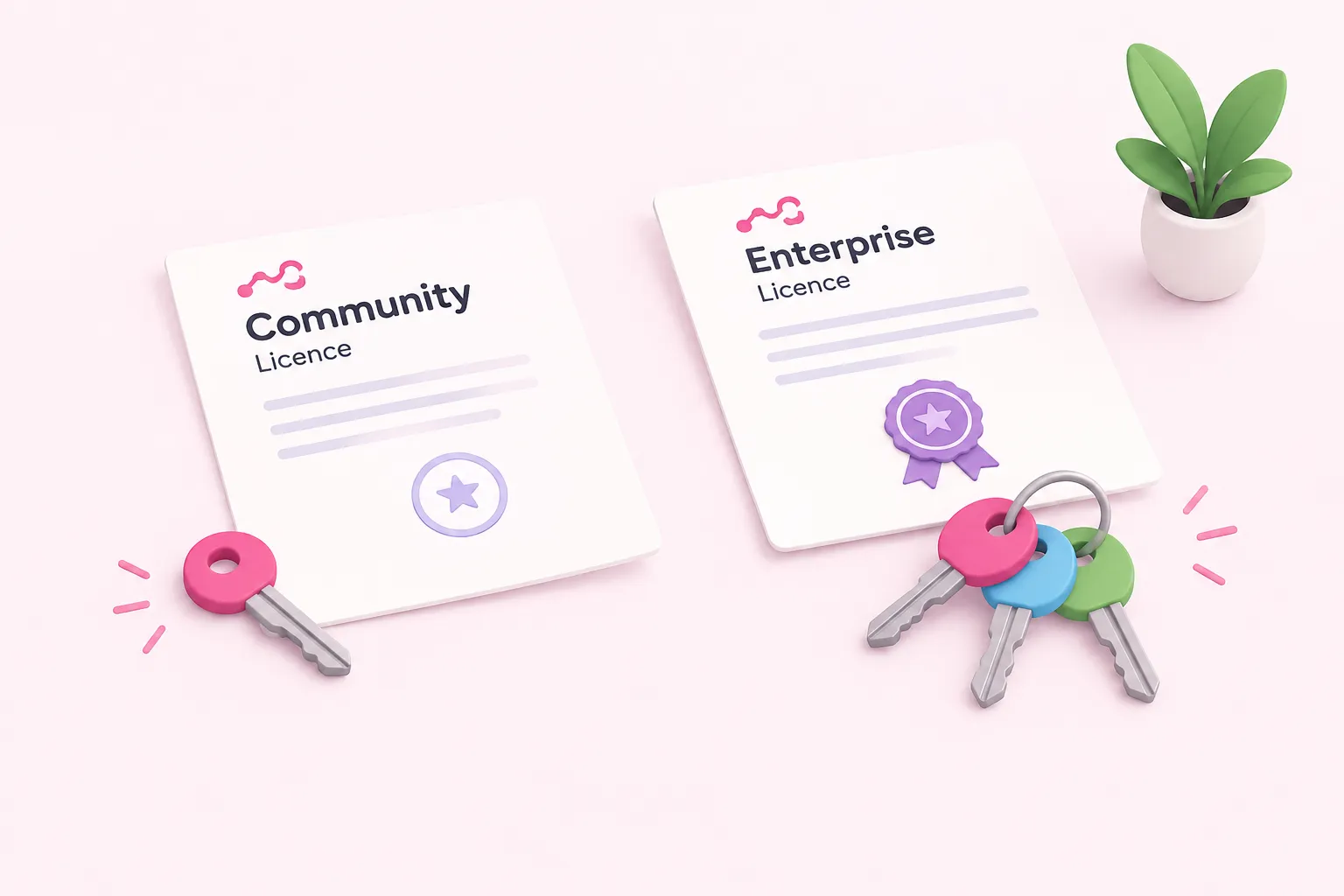
Before scoping the work, ask which n8n edition the workflow will run on: Community, registered Community, Business, or Enterprise. n8n's own documentation states that the self-hosted Community edition already includes nearly the complete feature set of the product, so a freelancer proposing Community edition is not automatically offering a stripped-down build. n8n also notes that its pricing page is the definitive source for what each plan currently includes, since features shift between releases.
Edition also changes who can see what a freelancer builds. On an unregistered Community edition instance, n8n's documentation states that only the instance owner and whoever created a given workflow or credential can access it. If your freelancer builds everything under a personal account, ask explicitly how access transfers to your team at handoff; this restriction lifts once Business or Enterprise sharing is enabled.
| Situation | What to confirm |
|---|---|
| Community edition, unregistered | Only the instance owner and the creator of a workflow or credential can access it; ask how access transfers at handoff |
| Business or Enterprise edition | Sharing restrictions are lifted, so confirm this is the plan the finished build assumes |
| Any edition | Ask the vendor to name the exact edition, since feature availability differs and can change over time |
Hiring outside help is not itself a licensing problem: n8n's licensing page confirms that third parties are free to offer commercial consulting or support services for building n8n workflows without a separate agreement with n8n. The one thing worth confirming in writing is scope of reuse: n8n's Sustainable Use License restricts use of the underlying software to a company's own internal business purposes, so if a delivered template is meant to be resold or redistributed, raise that explicitly rather than assume it is covered.
Sources: Compare editions | Deploy | n8n Docs, Community license | n8n Community license | n8n Docs
Security and Credential Handling: What to Ask a Vendor to Show You
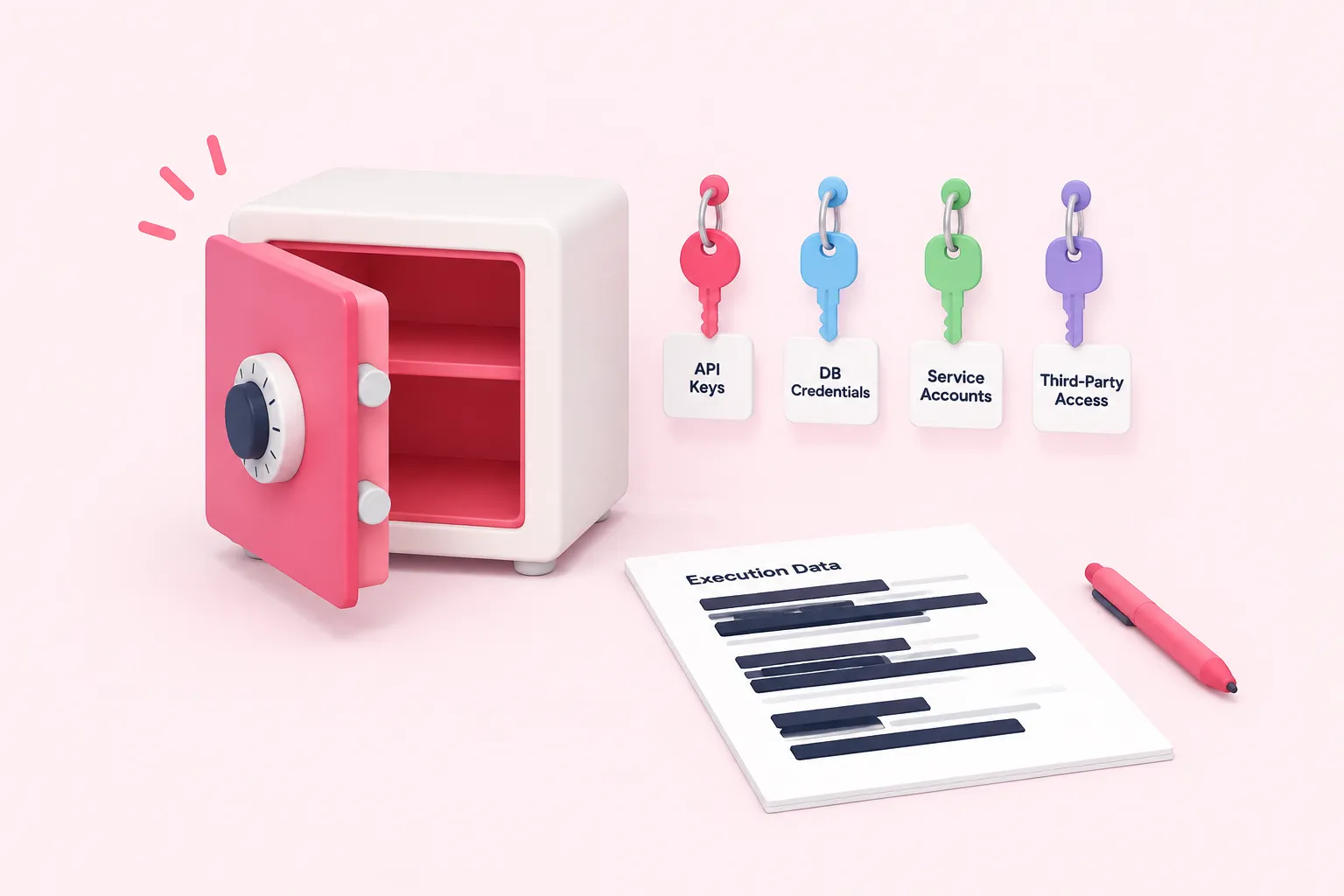
n8n's own security documentation frames a set of controls worth asking a vendor whether they configured: running a security audit, setting up SSL and SSO, restricting which nodes and public API endpoints are exposed, and redacting execution data that might hold sensitive fields. None of this proves a specific freelancer implemented it on your instance, but it gives you a concrete list to ask about instead of a vague request for security.
- Has a security audit been run on this instance?
- Is SSL configured for the instance the workflow runs on?
- Is SSO in use, or is this a single shared login?
- Are nodes and public API access restricted to what the workflow actually needs?
- Is execution data redacted where it could contain sensitive fields?
One item is worth flagging separately: storing credentials in an external secrets vault, rather than n8n's own built-in encrypted credential store, is documented as an Enterprise-only capability on both n8n Cloud and self-hosted deployments, and some vault features were added only in later n8n versions. If a freelancer is building on a Community-edition instance, do not expect an external vault as a deliverable; ask instead how credentials are separated by environment inside n8n's own credential store.
Sources: Security | Deploy | n8n Docs, Use external secret stores | Administer | n8n Docs
Production-Readiness Engineering Checks
Beyond licensing and security, the next part of a hire n8n developer checklist is engineering behavior: will this workflow act correctly when something goes wrong, not just when a demo runs cleanly. A production-readiness checklist a community member shared in an n8n community forum discussion in 2026 recommends checking whether a delivered workflow handles duplicate inbound events safely, since a retried webhook can otherwise create a duplicate order or a duplicate charge.
Another contributor in the same thread proposed handoff readiness as a further dimension worth checking on its own, separate from whether the workflow runs correctly: can your team actually take over the build once the engagement ends. It reflects one contributor's framing rather than a fixed standard, but it is a useful question to put in writing before signing off.
Code and Workflow Hygiene
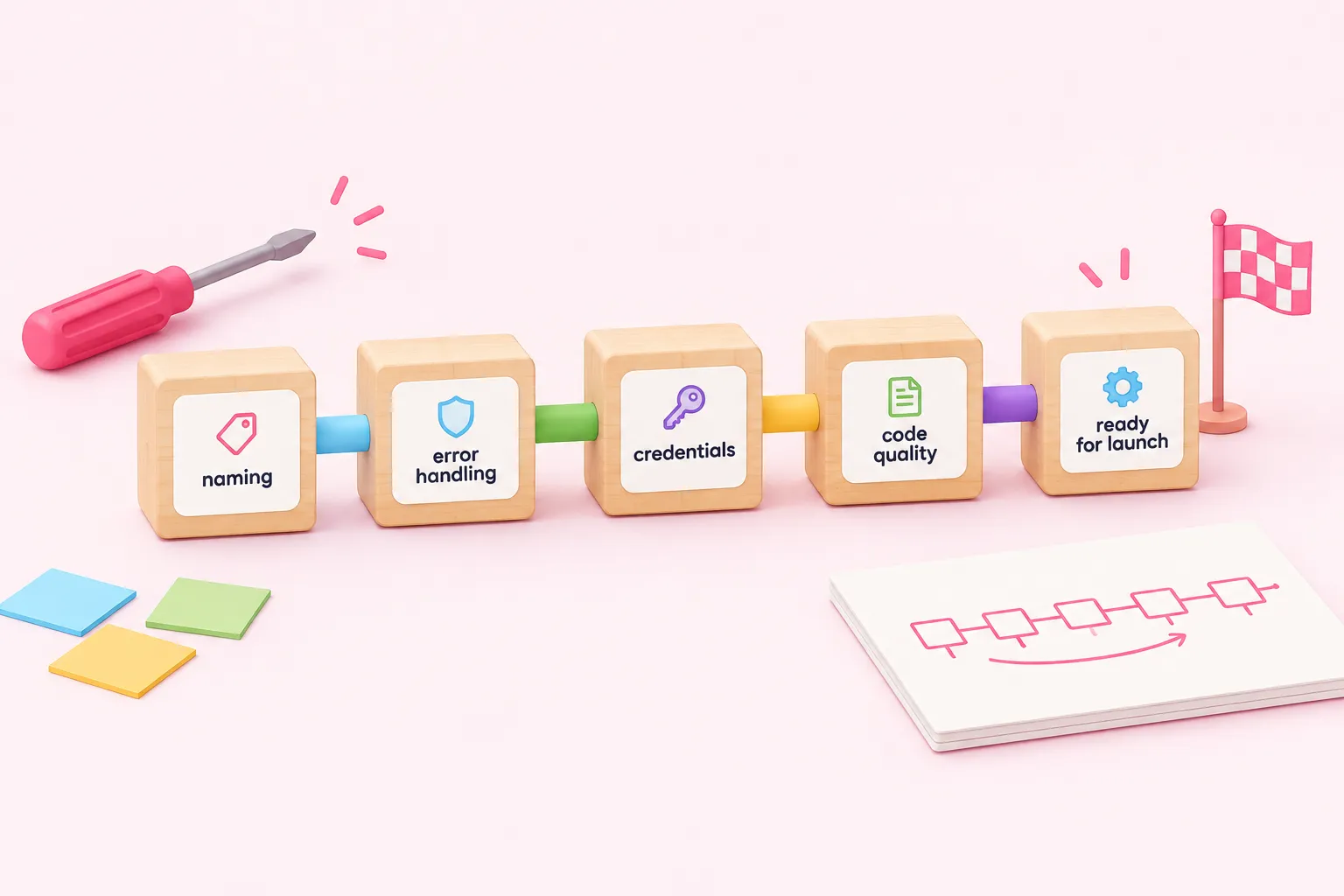
Ask to see a past delivery, or a sanitized excerpt of the current build, so your team can check its hygiene rather than just its outcome. A vendor blog focused on production n8n workflows, written by a company that also sells n8n workflow-building services, names error handling on nodes that call external APIs as something worth checking directly, since a call to a paid API or a customer-facing service should not be allowed to fail silently.
The same guide also warns against hardcoding credentials directly into a workflow, which lines up with the credential-store question raised earlier. If a freelancer's export shows an API key typed into a node instead of pulled from an n8n credential, that is worth raising before you accept the build, not after.
Sources: n8n Best Practices – 10 Rules for… – Till Freitag
Ownership, Handoff, and Monitoring After Go-Live
The handoff-readiness idea raised earlier points to a practical next step here: before signing anything, get in writing who owns the n8n instance, the credentials, and the workflow files once the engagement ends, and how access moves to your team if a freelancer's personal account created them. Also ask whether a global error workflow with alerting will be part of the delivery, and how long execution data will be retained inside n8n versus written out to an external log your team controls.
Questions to Ask Before Signing: A Red-Flag Checklist
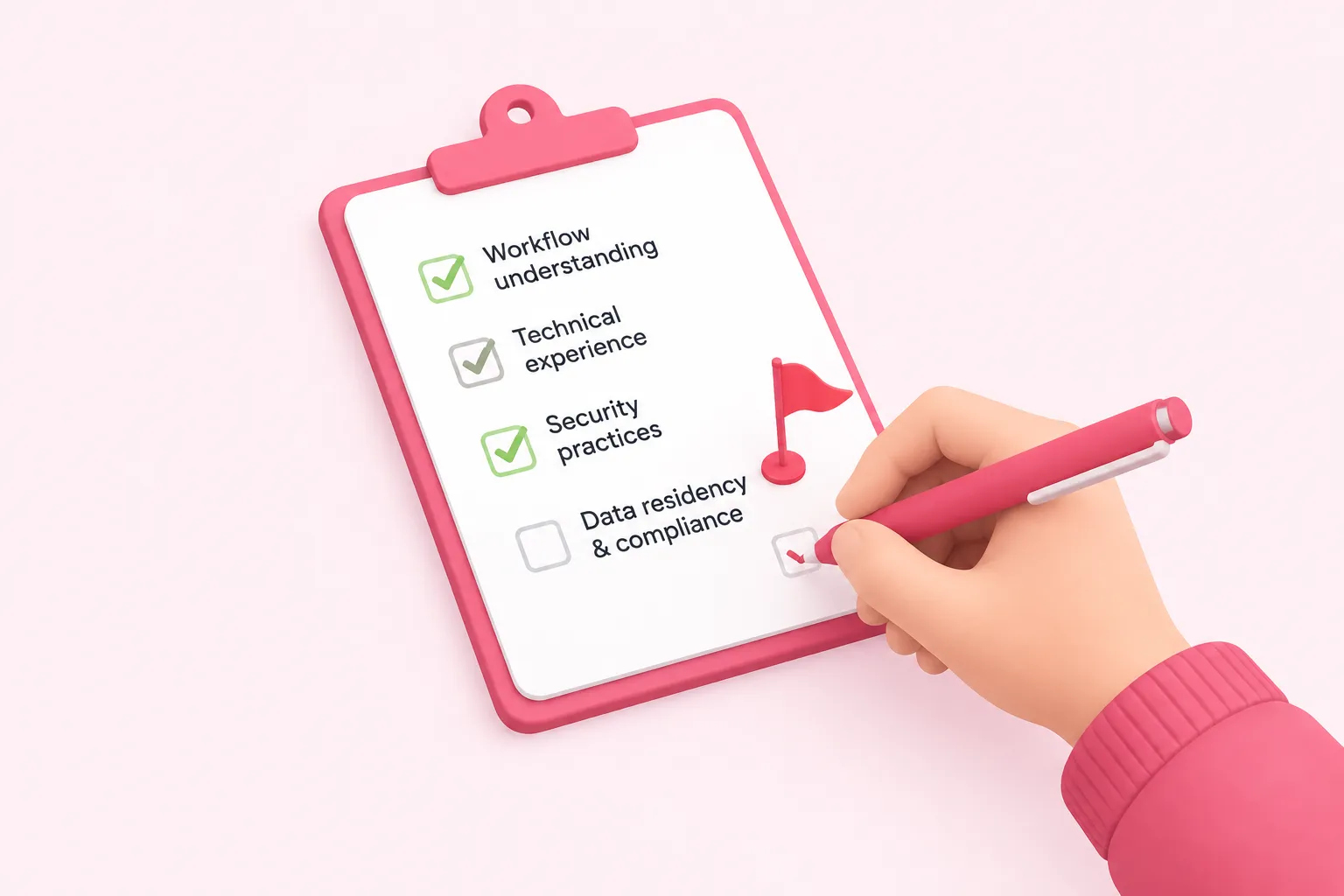
Pull the checks above into a short pre-engagement conversation before a contract is signed. Use this hire n8n developer checklist as a starting point, and add anything specific to your own compliance or data-residency needs.
Sources: Compare editions | Deploy | n8n Docs, Use external secret stores | Administer | n8n Docs, The 6-dimension production-readiness checklist I've been using on every n8n workflow review - English 🇬🇧 - n8n Community, n8n Best Practices – 10 Rules for… – Till Freitag